When the power goes out, your comfort and safety shouldn’t go with it. That’s where a home backup generator comes in—offering reliable power, peace of mind, and the ability to keep life moving forward, no matter the weather.
At Anthony Plumbing, Heating, Cooling & Electric, we understand the importance of uninterrupted comfort. With over 70 years of experience and a reputation built on trust, we’ve helped thousands of homeowners make confident decisions about their home systems—including finding the perfect generator solution.
Whether you’re considering a whole-home generator for full back up power or just want to power the essentials during an outage, this guide walks you through everything you need to know to make the right choice.
Step 1: Choose the Right Size for Your Home
One of the biggest decisions when selecting a generator is determining the right size for your household needs. A generator that’s too small won’t cover your must-haves, while one that’s too large may be more costly than necessary. The goal is to find the “just right” fit for your energy usage and budget.
Powering the Essentials
If your priority is to keep your refrigerator running, lights on, and internet connected, a smaller backup generator may do the trick. These systems offer targeted power for high-priority appliances without the full investment of a whole-house unit.
This option is great for homeowners who want to avoid major disruptions during an outage while keeping costs in check.
Whole-Home Coverage
If you want uninterrupted comfort—heating and cooling systems, kitchen appliances, medical devices, laundry machines, and more—a whole-home generator is your best bet. These systems are designed to handle higher energy demands and longer outages, making them ideal for families, larger homes, or areas with frequent power interruptions.
How to Determine Your Generator Size
- Estimate Your Power Needs: Take inventory of the appliances and systems you want to power during an outage. A professional from Anthony can help calculate total wattage and recommend the right generator size.
- Plan for Growth: Thinking about adding a new HVAC system or high-powered appliances in the future? Plan ahead by choosing a generator that can grow with your home.
- Consider Surge Power: Some appliances, like AC units and refrigerators, require more power to start than they do to run. Your generator needs to handle those surge demands smoothly.
Step 2: Select the Best Fuel Source
Generators run on a variety of fuels, and each option has pros and cons depending on your location, accessibility, and household needs.
Natural Gas
Pros:
- Hooks directly into your existing gas line—no refueling necessary.
- Cleaner and lower maintenance than diesel or gasoline.
- Perfect for homeowners who already have gas service.
Cons:
- Not available in all areas.
Natural gas generators are a preferred choice for many Anthony customers because they’re convenient, low-maintenance, and always ready to go when the grid fails.
Propane
Pros:
- Great alternative for homes without natural gas access.
- Long shelf life and fewer emissions than diesel.
- Easy to store in large tanks for long-term readiness.
Cons:
- Requires fuel tank monitoring and regular refills.
Propane is a flexible, dependable choice, especially in rural areas. It gives homeowners the option to stockpile fuel and plan ahead.
Diesel
Pros:
- High fuel efficiency and long-lasting performance.
- Well-suited for larger or higher-demand homes.
- Fuel stores well over time.
Cons:
- Higher upfront cost.
- Requires ample fuel storage.
Diesel is often chosen for homes with larger electrical loads or specific power requirements, such as medical equipment or commercial-grade HVAC systems.
Which Fuel Is Right for You?
Our Anthony team will guide you through your options based on your home’s location, fuel availability, energy needs, and long-term goals. We pride ourselves on honest recommendations and transparent pricing so you can make the best choice with confidence.
Step 3: Know the Installation Process & Timeline
Installing a generator isn’t as simple as plugging it in—it involves planning, permitting, and professional expertise. With Anthony, you get start-to-finish service from local experts who’ve installed thousands of systems across our community.
What to Expect:
- Site Assessment
A technician will visit your home to evaluate energy needs, determine optimal generator placement, and ensure everything complies with local codes.
- Permitting & Scheduling
Depending on your municipality, permits may be required before installation. We handle all paperwork and approvals, keeping the process simple for you.
- Installation & Testing
Once approvals are in place, our licensed professionals install the generator, connect it to your fuel source, and ensure safe operation. Before we leave, we’ll test the system thoroughly to confirm it’s ready for the next outage.
From start to finish, our convenient scheduling, same-day availability, and real-time text updates keep you informed and in control. That’s what makes us the Technicians You Can Trust With Your Housekeys®.
Step 4: Enjoy “Set It and Forget It” Reliability
Standby generators are built for convenience. Once installed, they automatically detect outages and power up—no dragging out cords or worrying about manual start-up.
Whether you’re on vacation or asleep in bed, your generator will kick in within seconds to keep your home running without interruption. At Anthony, we make your comfort worry-free.
Why Choose Anthony for Your Home Generator?
At Anthony Plumbing, Heating, Cooling & Electric, we’re more than just a service provider—we’re your neighbor. We offer more than reliable home solutions; we provide peace of mind, expert guidance, and five-star care every step of the way.
- Trusted Experts: With over 70 years of experience and tens of thousands of 5-star reviews, we’re the top choice for homeowners across the region.
- Reliable, Convenient Service: From online booking to weekend appointments and real-time updates, we make home service easy.
- Upfront Pricing: You’ll never be surprised with hidden fees. We believe in honest, transparent pricing.
- Committed to Excellence: Our work is backed by a satisfaction guarantee and a passion for getting it right—every time.
- Anthony Cares: We support the community through volunteer work, donations, and acts of kindness that make a difference.
Ready to Power Your Home with Confidence?
Let Anthony Plumbing, Heating, Cooling & Electric help you find the perfect generator for your home. Schedule your free consultation today and experience the trusted service that’s earned us a reputation as the Technicians You Can Trust With Your Housekeys®.
The main function of an electrical panel is to shut off power when connections get too hot. A lot of heat runs through your electrical connections, and that heat can cause connections to fail and arcing, which causes fires. There are 3 main reasons to replace or upgrade your electrical panel: age, type and increased electrical needs of your home.
Age Matters: Electrical Panels Do Not Last Forever
Electrical panels do not last forever. Heat runs through the connections all day and night, causing them to wear out over time. If your electrical panel is more than 20 years old, it could be a fire hazard that can threaten the safety of your home and family. Older panels have breakers that fail over time and will not trip as needed.
One of the most common causes of residential fires are worn-out electrical panels. According to the most recent data from the National Fire Protection Association:
- Annual Incidence: Between 2015-2019, local fire departments responded to an average of 46,700 home fires each year that were caused by electrical failures.
- Injuries & Deaths: Fires involving electrical failures or malfunctions accounted for approximately 390 deaths and 1,330 injuries annually.
- Property Damage: The average annual property damage from these fires was estimated at $1.5 billion.
- Cause of Ignition: Arcing was identified as the heat source in approximately 63% of the home fires involving an electrical failure or malfunction.
Arc flashes commonly occur in electrical panels. Arcing occurs when one of an electrical panel’s many circuits become overloaded and overheats. Once damaged, a circuit breaker can malfunction and continue to let electricity through, potentially causing arcing and the possibility of a fire.
Codes Change for a Reason: Get Rid of Outdated Panels
Older homes are more likely to have outdated electrical panels that are extremely unsafe and no longer meet codes for residential safety. If you own a home built before 1990, you might have one of these outdated main electric panel boxes in your home.
While the National Electric Code (NEC) does not name specific panel brands, these following panels have been identified by industry professionals and safety organizations as having design flaws or safety issues.
- Federal Pacific Electric (FPE) Panels – FPE panels are most common in homes built between 1950 and 1980. Federal Pacific Electric will likely be written on the cover of your breaker box. Inside, look for the name Stab-Loc (the brand name of the circuit breakers). FPE electric panels’ circuit breakers fail to trip when they should, leading to thousands of fires in the United States.
- Zinsco Panels - Zinsco or GTE-Sylvania panels were popular electrical panels installed in homes throughout the 1970s. The circuit breakers inside many Zinsco panels melt to the main bus bar. This means the breaker won’t ever trip, even when there’s a short or overloaded circuit. So, if there ever is a short, or other problems, the surge of power melts wires and starts a fire in your home.
- Split-Bus Electrical Panels – Split-bus breakers are divided into 2 groups with no single disconnect breaker. Because these panels have not been used for over 40 years, they are unsafe because of their age.
- Fuse-Box – Screw-in Fuse boxes are old electrical panels that use fuses instead of switches. These boxes typically use too few circuits, so circuits are tripped often, causing homeowners to replace fuses with larger amped fuses, or worse yet, a metal object like a penny.
Room to Grow: Home Improvements Require Larger Electrical Panels
You finally installed those extra outdoor outlets, a new ceiling fan in the guest room, and a freezer in the garage to store your extra food. Now you are saving up money to install that hot tub outside. Stop right there. As you add more electrical devices or fixtures in your home, your electrical panel may need to be upgraded to accommodate the increased demand.
Electrical panels come in different amp loads, and the more your electrical needs, the bigger the amp load you need. Plus, the more appliances, fixtures, and outlets you have, the more switches you need to hold them. If your electrical panel is full, it will get hotter and be more of a fire risk. Replace full panels with larger ones that can better handle your current load plus your home’s future electrical needs.
Don’t DIY on This One – Call us Today
While we encourage you to learn as much about your electrical system as possible, electricity is not a good candidate for a DIY project. DIY wiring is not only dangerous, it seldom meets codes and can be far more costly to repair in the future. Anthony’s licensed and trained electricians provide you with the best service, electrical solutions and advice.
Call our Anthony electricians today at (913) 298-0444.
As power grids and homes strain under increasingly erratic weather they were not designed to withstand, consumers are looking for alternative sources of power generation.
Power outages affect us all year round. Lightning, high winds, ice storms, heavy snows, and grid failures can leave us feeling vulnerable. Whole-home standby generators provide a reliable source of electricity for homeowners.
Losing Power Costs Money
Losing power is a costly proposition, not just in inconvenience and time lost, but in money. Those who lose cooling or heating must seek shelter.
Those who lose power face water damage caused by frozen pipes, sump pump failures, and additional costs associated with spoiled refrigerated foods.
Those who have well water or sewage pumps lose water and the ability to flush their waste. And if you are older or have special needs, these challenges may cause you to reconsider your living arrangement altogether.
Portable Generators vs. Whole-Home Standby Generators vs. Solar Panels
According to energy.gov, power outages have increased by over 400% since the year 2000, so the question homeowners are facing is not whether should I get an alternative energy source, but which alternative energy choice should I choose.
The most widely available options to homeowners are whole-home standby generators, portable generators, and solar panels. Whole-home standby generators are widely considered the most reliable choice.
This is because they go to work automatically when power is lost and are not dependent upon sunshine or electrical grids.
Solar panels conversely need sunlight to work and require that the region’s electrical grid is still functioning unless a costly battery storage system is purchased. Portable generators require manual setup when a power outage occurs, and do not power the entire house.
Whole-home standby generators run off natural gas or propane and power the whole house automatically with no effort or thought when electricity is lost.
How Do I Choose the Best Generator for My Home?
There are a lot of choices, both in generators and in generator installers. Installing a generator is a major investment.
It is wise to choose manufacturers and installation companies who have been around for a long time and can stand by their work.
There are several things to consider when choosing a home standby generator and an installation company:
- Guaranteed installation workmanship and equipment warranties.
- The quietness of the generator motor.
- Smooth, undistorted electricity supply to protect sensitive electronics and appliances.
- Option to add a mobile link for remote monitoring.
- Availability for questions or assistance.
What is Involved with a Generator Installation?
Installing a whole-home standby generator requires skill in electricity, gas, small motors, electronics, and ground preparation.
It is highly recommended that you choose a company that employs electricians with generator installation experience and that has plumbers on hand skilled in gas fuel line supplies.
You also need an installer who is knowledgeable of the different generator options and how to choose the proper size for your home.
There are five main steps in generator installation:
- Site location away from windows, on well-drained soil, with space surrounding the unit for maintenance access.
- Installation on a concrete slab on pea gravel on a pre-leveled area.
- Connection of the fuel line and installation of the transfer switch next to the electrical panel.
- Breaking in the engine through lubrication, adding oil, running for an hour, then changing the oil.
- Outage simulation testing and programming of weekly self-test.
Is a Whole-Home Standby Generator Right for Me?
There are whole-home standby generators that work for every home and circumstance.
The generator experts at Anthony can walk you through the process of deciding if a generator is right for you. We can explain all the options available in choosing the right model for your home.
Contact us today at (913) 298-0444 to schedule your free in-home consultation.
Nothing tests the limits of your AC unit like a heatwave, and when a heatwave hits, it spares no one! That is when heating and cooling companies like Anthony Plumbing, Heating, Cooling & Electric are the busiest serving suffering homeowners.
The following tips are good to know, especially when you are waiting for your cooling technician to arrive. They may help prevent your AC from breaking down altogether.
Technicians Cannot Fix a Frozen AC Unit! Let it Thaw Before they Arrive
We hear this a lot: “My AC unit is running but no cool air is coming out of the vents!” The most typical cause of AC troubles is a frozen coil. The coil must thaw before your technician can repair it.
If warm air is coming out of your vents, turn the AC off and turn the fan on. This will let the unit thaw out, hopefully before your technician arrives, so it can be repaired quickly.
There are many reasons why your AC unit may be freezing up or not cooling. Air conditioners need proper airflow to keep the cold coil warm. Warm air from the home is needed for the coil to stay cold and keep the temperature above freezing.
Without it, coils freeze before the condensed water can be drained away from the unit.
Since dirty air filters and closed air registers can impede airflow, it’s a good idea to check the air filter and make sure the registers are both clear and open.
A freeze-up can also be caused by low refrigerant and improper fan operation. Low refrigerant levels make the coils too cold, and a faulty fan prevents air from moving.
Faulty thermostats and drainage problems are often the cause of a freeze-up. In the cooling process, an AC unit condenses water vapor into a liquid that drains outside.
If the coils are frozen, the ice will cause a blockage for the drain hole. The AC still runs but doesn’t properly cool the home and uses a lot more electricity.
Keep in mind that running an air conditioner with frozen coils can lead to extensive damage to the compressor. This is the most expensive part of an AC unit, and it’s not a repair or replacement that you want to face.
AC Units Can Only Cool up to 20 Degrees Cooler than the Outside Air
If your AC is working, but you wish it was working better, it just might not be possible. Generally speaking, an air conditioning system is designed to accommodate up to a 20-degree difference between the outside air and inside air while still keeping your home at a comfortable 55% humidity level.
This means that if it is 100 degrees outside, it will be nearly impossible to reach 70 degrees inside without the AC unit working completely overtime and causing problems such as excess humidity.
A good rule of thumb is during the hottest days when the dial reaches 100 degrees is to set your AC to somewhere between 75 and 80 degrees.
You can also supplement that slight temperature difference with closed curtains on the sunny side of the building, running ceiling fans, and portable fans in rooms in which people are present.
Check Your Furnace and Furnace Filter
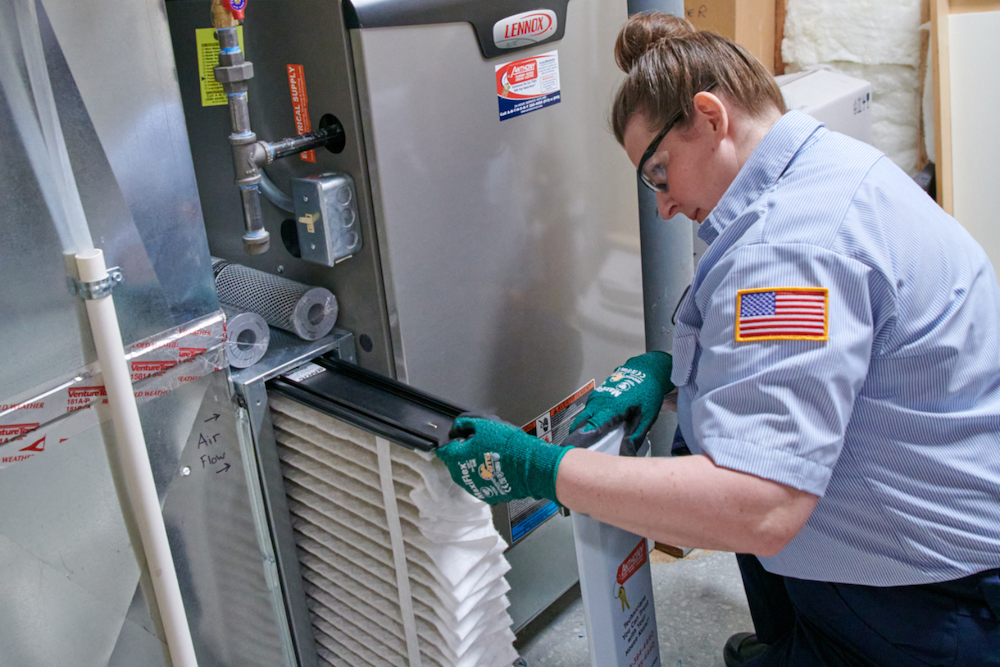
The fan in your furnace is what circulates the cool air from your central AC unit throughout your home. Check your furnace – if the fan isn’t running, make sure your furnace is turned on, or check your breaker to the furnace and ensure that it has not been tripped.
If the fan is running, check your filter. You will have to turn the fan off to do this. For a step-by-step guide, watch our YouTube video.
At a minimum, you should be changing the filter once every 3 months, and as often as once a month if your system is running all the time. Neglect this chore, and a dirty filter can lead to poor air flow or freezing up of your unit’s evaporator coil.
Take Full Advantage of Fans and Blinds
Any type of fan, but especially ceiling fans, can help keep cool air circulating throughout your home. That removes some of the burden from your AC system.
Just be sure your ceiling fans are turning counterclockwise during the summer, which promotes greater airflow.
Bright sunlight is your AC system’s nemesis.
By closing blinds and sliding curtains to block the sun’s rays, especially in the south and west-facing windows, you’ll also shield your space from the sun’s heat.
Keep Doors Closed, Especially the Garage Door
Your garage door is the biggest door in your house, so if your garage is attached to your home, keep your garage door closed. Many attached garages are being cooled by your AC unit, and you don’t want that conditioned air to escape.
Even non-cooled garages should be kept shut, so heated air cannot enter your home and cause your AC unit to have to work harder.
If you keep your car in your attached garage, limiting trips during a heatwave can help preserve the cool air in your home. Driving a car with a hot engine into your cooled garage puts an extra load on your AC unit.
Dehumidify to Help your AC Keep you Cooler
The more humidity that is present inside your home, the harder your air conditioning system will have to work, and the less effective it will be. Adding a whole home or a stand-alone dehumidifier can go a long way to keeping you cooler and protecting your home from the damaging effects of too much humidity.
Signs that your home may be too humid are:
- The air in your home feels moist.
- There is a damp or musty smell in parts of your home.
- Your windows are foggy.
For the summer months, a humidity level below 60% is recommended by most experts for indoor comfort. The most efficient and reliable way to manage the moisture in your home is to have an Anthony technician install a dehumidifier directly on your HVAC system.
The dehumidifier will work with your AC system to pull excess water from the air before it is sent through the air ducts in your home.
Alternatively, you can purchase a stand-alone dehumidifier and manage the humidity level using a manual humidity level indicator. But unless you place your unit directly over a drain, you will have to empty the reservoir every time it fills up and activate the shutoff switch.
Did you remember to turn your whole-home humidifier off for the summer? If you have a humidifier installed in the ductwork by your furnace, make sure it is in summer-mode, and that the humidifier knob is turned completely off.
Like a nice hot shower? Not during a heatwave, please. Any kind of shower adds moisture to your home, causing your AC to struggle more, so avoid them on the hottest days. If you must take a shower, use cool water and make it quick, and turn on your exhaust fan.
Have Your System Serviced Annually
Well duh, now you tell us! But really, rather than wait until a heatwave, please get your AC unit checked and serviced NOW. We are here night and day to schedule your AC tune-up.
Call (913) 298-0444, or click here to schedule online.
Outdoor lighting and entertainment systems are great ways to add value and beauty to your home while enhancing your outdoor living areas.
There is a wide range of lighting solutions as well as options for theatres, sound systems, fireplaces, water features, grills, and charging stations for your phones and Bluetooth devices. Outdoor electrical products need outdoor-rated electrical power delivery systems.
The expert electricians at Anthony PHCE can advise you on the best outdoor outlets, wiring, and electrical distribution boxes needed to achieve your present and future outdoor electrical goals and install them for you, too.
Outdoor Entrance Lighting adds Beauty, Safety, and Security
Increasing the outdoor lighting of your front entrance is a great way to add beauty, safety, and security to your home. To keep electricity costs down, consider LED options that use as little as one-third of the energy and last much longer.
When choosing your outdoor lighting, consider connecting the network to a Wi-Fi timer or installing motion sensors so lights turn on only when needed.
Outdoor light fixtures should carry an Underwriters Laboratories (UL) rating that indicates where they can be used. Dry-rated fixtures cannot be subjected to excessive moisture and should not be installed outdoors. Tolerances vary for fixtures that are damp- and wet-rated:
- Damp-rated: Suitable for sheltered porch areas that are protected from water during storms, and from excessive moisture.
- Wet-rated: Necessary for fixtures fully open to the elements, where rain and snow can come into direct contact with the fixture.
Outdoor Deck and Patio Lighting Enhances Décor and Increases Visibility
Deck and patio outdoor lighting is beautiful, but also very important to increase visibility for safety and convenience after dark. Lighting can be added to stairs, rails, rail posts, ceilings, floors, and landscaping.
Lighting schemes can be designed to match any aesthetic effect and visibility enhancement a homeowner wishes to achieve and can include the following:
- Post Cap Lights – placed on the top of the rail post, these add perimeter lighting to the deck rails.
- Post Mount / Side Mount Lights – placed on the sides of rail posts or any vertical surface, these lights point down and add illumination across the deck or patio floor.
- Under-Rail and Under-Tread Stair Lighting – these lights are typically LED strip lights that are placed pointing downward underneath stair tread overhangs or under rails. You cannot see the lights themselves, only the illumination they create.
- Ceiling Lighting – For covered decks, ceiling lighting is a great choice for overall visibility. Hanging chandeliers provide added decoration while bringing the light lower to increase visibility. Ceiling fans with lights provide air movement. Recessed can lights in the ceiling provide light with a modern, uncluttered look. Spotlights, lanterns, and string lights are other ceiling lighting options.
- Floor Lighting – In-floor lighting can be installed in your deck floor for a modern, soft look. These recessed, low voltage can-lights placed near steps and deck corners can add safety while offering a cozy glow.

Outdoor Water and Fire Features offer Relaxation and Warmth
Outdoor experiences are even more enjoyable when trickling water or dancing flames are added for ambiance. Outdoor fire pits and electric fireplaces are popular way to add lighting, warmth, and decoration to your deck or patio.
Water features such as tabletop fountains, freestanding waterfalls, and in-ground ponds add beauty as well as relaxing white noise, which can help drown out sounds from nearby streets and the surrounding neighborhood.
Outdoor Theatres and Audio Systems Bring the Party Outside
Watching movies outside is a great way to enjoy nice weather. Outdoor televisions and outdoor projection systems come in a variety of options. But neither is enjoyable without a proper outdoor audio system.
Whether you opt for a full surround sound configuration with in-ground subwoofers or more decorative speakers that blend in with existing landscaping, a high-quality outdoor audio system can add a great deal of enjoyment to your outdoor experiences.
Outdoor Cooking with Electricity Makes Life Easier
Outdoor electrical stovetops, grills, and smokers offer several benefits over traditional gas and charcoal options. Cooking temperatures can be achieved more quickly, so items can be cooked individually whenever needed.
Electrical cooking eliminates the risk of running out of propane or charcoal. In addition, electrical cooking is cleaner, both in reduced fumes and in the number of non-stick options available.
Outdoor Delivery Systems and Charging Stations Power Outdoor Living
Whether you choose an outdoor electrical system that is hardwired or plugged into outlets, you will need a safe and reliable outdoor power delivery system that conforms to city codes. Outdoor outlets can become crowded quickly.
Installing additional outdoor outlets is always a great option. But make sure they are GFCI (Ground Fault Circuit Interrupter).
More complex outdoor electrical systems may require underground wiring and independent power supplies to avoid running multiple extension cords. If a hot tub is in your plans, an additional or upgraded electrical panel and breaker box may be required.
Do you receive your outdoor entertainment from battery-operated Bluetooth devices run by your phone? Then an outdoor charging station may be best for you.
Charging stations can be installed that offer both regular and USB outlet ports to keep your Bluetooth speakers, computers, and phones charged and running strong. These can be free-standing pedestals on your deck or next to your patio.
When making plans to expand your outdoor electrical delivery, remember to consider your holiday decorating desires to ensure you have the necessary outdoor electrical delivery to support your electrical decorations.
Call Our Outdoor Electrical Experts Today
The expert electricians at Anthony PHCE can advise you on the best way to meet your outdoor electrical needs and install outdoor electrical lighting and entertainment systems that will add value to your home and enjoyment for years to come.
Contact us today at (913) 298-0444 or via our Schedule Now or Chat features at AnthonyPHCE.com.
Your AC and furnace systems need to be in good working order as they are responsible for keeping your home cool and warm year-round. A well-maintained AC and furnace also provide you with cleaner indoor air, lower energy bills, and a safe home.
How much maintenance do your AC and furnace need, and what should that maintenance entail?
How Often Should You Tune Up Your AC and Furnace?
Your AC and furnace systems need maintenance to keep their components clean and working properly. Over time, dirt builds up in the coils, fans, filters, and other components causing your AC and furnace to work harder.
An AC and furnace system that is working harder has a shorter lifespan and uses more energy. Annual maintenance can extend their life by several years, as well as save you up to 15 percent a month on your energy bills.
What happens if you skip a year of AC and furnace maintenance? By delaying your annual AC and furnace tune-up, you are taking a risk that saving money in the short run will not cause your system to need costly repairs or premature replacement. Worse yet, you risk the possibility that your system may stop working during the hottest or coldest days of the year when they work the hardest.
The Top Four Reasons Annual Tune-Ups are Recommended
-
Save on electricity and gas usage to lower energy bills and reduce environmental impact.
- When you do not maintain your HVAC system's health, it will run less efficiently, meaning your cooling or heating (electric or gas) bills will be higher than they should be. Excessive energy consumption places an unnecessary burden on the environment.
-
By paying a little now you can keep warranties intact and prevent spending more later.
- According to Consumer Reports, a heating and cooling system lasts about 10 to 15 years. You shorten the lifespan and possibly void warranties if you do not maintain your system annually. Over time, air conditioner coils become dirty, which makes them less efficient. In addition, this will cause the AC to run longer, resulting in increased energy cost and reduced lifespan of the equipment.
- Most air conditioner and furnace manufacturers require regular maintenance to fulfill their warranties. They may also require documented annual maintenance by a professional HVAC technician.
-
Avoid having your air conditioner or furnace break down at the worst time.
- Neglecting to maintain your air conditioner and furnace is like neglecting to take care of your car. The longer you wait, the more likely something is to break, costing you more in the long run. For example, not changing your filter can cause the air in your home not to be clean. It puts strain on the system and can lead to costly repairs like a blower motor failure.
- Faulty electrical connections. Over time, electrical connections can loosen and cause unsafe operation of your system and reduce the life of major components.
-
Keep your family safe from fires and carbon monoxide poisoning.
Many homeowners do not realize the proactive steps that can be taken to keep their systems running at optimum capacity and avoid breakdowns at inconvenient times. Scheduling preventative maintenance on your HVAC system is essential and many do not realize the vast benefits.
Some feel that calling a technician to examine your system when nothing seems wrong is a waste of time and money. However, waiting until you experience problems is the least efficient way to maintain your system and often ends in more costly repairs and wasted time.
What Should be Included in an AC and Furnace Maintenance Tune-Up Visit?
During your preventative maintenance visit with Anthony PHCE, the technician will ask questions about how the system has been running and anything you want them to pay special attention to during the tune-up.
When performing an air conditioning tune-up, they will conduct a 360-degree evaluation, focusing on 16 efficiency and safety items. They will ensure the system is operating efficiently and advise you of any current or potential issues.
Some of the important tune-up tasks customers may not see or overlook:
- Waxing the air conditioner. This will make it look new year after year and prevent the finish from oxidizing.
- Inspecting condensate water pipe/hoses. Replacing hoses is critical; mold often grows in them and a blockage can occur, causing water to spill into the furnace electronics.
- Testing the start assist component. This electronic component fails when it gets hot outside. It can be tested to tell if it is starting to go out before it fails on a hot day.
- Adjusting duct balancing dampers. The technician will make any adjustments needed to force cold air to the rooms that need it the most.
- Cleaning the outdoor coil. The technician will wash the coil from the inside out. Removing leaves, grass, and other debris from the inside of the coil extends the system's life and saves money.
- Replacing air filters. Standard throw-away filters are provided free of charge or can be replaced with high-efficiency media filters.
Service Agreement Plans Can Save Money and Add Convenience
Service agreement plans like Anthony PHCE’s Anthony Service Agreement Program (A.S.A.P.) are a great way to save money on annual tune-ups. Homeowners receive reminders when service is due, making scheduling routine maintenance more convenient. Your A.S.A.P. membership includes four visits a year for one low price:
- 16-point cooling tune-up
- 17-point heating tune-up
- 18-point plumbing inspection with either a 10-point (tank) or 7-point (tankless) inspection of the water heater
- 17-point electrical inspection
The professionals at Anthony PHCE are here to save you money and make your life easier. You may contact us anytime via chat or email from our website. Also, schedule service or request estimates through our Schedule Now button at the top of this page. We are always happy to talk to you on the phone as well, at (913) 298-0444.
One of the most frequent places residential fires start is in electrical panels. Homeowners' insurance may cover damage caused by fires that start in electrical panels.
Coverage eligibility is contingent on the type of your electrical panel, its age, the residential codes in your area, and annual electrical inspections.
Does My Homeowners Insurance Cover Electrical Panel Fires?
If there is a problem with your home’s electrical wiring, you may not find out until it is too late. Three out of five electrical fires are caused by arcing which happens when an electrical panel breaker fails to trip.
Electrical fires are one of the top causes of residential fires and cause an estimated 500 deaths and $1.3 billion in property damage each year.
If electrical panels can be such a fire risk, then it is important to make sure that damage caused by fires originating in electrical panels is covered by homeowners insurance.
Unfortunately, coverage eligibility usually depends upon the following:
- the type of electrical panel
- the age of the panel
- regional code requirements
- annual inspections by qualified electricians.
Your insurance company will cover some types of panel boxes in certain circumstances but may deny you coverage if your panel boxes are older, outdated, or proven to be significantly risky.
How Can I Make Sure My Electrical Panel is Covered?
Bad wiring is a home’s most dangerous fire risk, especially if it derives from a faulty electrical panel. Insurance companies will deny coverage on some panels because of the risk of fires they pose for the homeowner.
To make sure your panel is covered, check what type it is and have it examined annually by a qualified electrician for safety and code compliance.
The Types of Panels Not Covered by Homeowners Insurance
If you have one of the following panels, they are probably not covered by homeowners insurance. The following panels have been deemed unsafe to have in your home>:
- Federal Pacific Electric (FPE) Panels – FPE panels are most common in homes built between 1950 and 1980. Federal Pacific Electric will likely be written on the cover of your breaker box. Inside, look for the name Stab-Loc (the brand name of the circuit breakers).
- Zinsco Panels – Zinsco or GTE-Sylvania panels were popular electrical panels installed in homes throughout the 1970s.
- Split-Bus Electrical Panels – Split-bus breakers are divided into 2 groups with no single disconnect breaker. These panels have not been installed for over 40 years.
- Fuse-Box – Screw-in fuse boxes are old electrical panels that use fuses instead of switches.
If your home was built before 1990, you may have one of these outdated panels in your home. These panels are unsafe and no longer meet code requirements for residential safety.
Do I Need Annual Electrical Inspections to Maintain Coverage?
Annual electrical inspections by a qualified electrician or certified electrical inspector may be needed to maintain coverage on your electrical panel, especially if the wiring or panel is older.
Heat runs through the connections all day and night, causing them to wear out over time. If your electrical panel is more than 20 years old, it could be a fire hazard.
Having the wiring to your electrical panel inspected annually can help with claims should you need to contact homeowners insurance.
When Should I Replace My Electrical Panel?
There are certain instances when homeowners should consider panel replacement:
Your Panel is Over 20 Years Old
If your panel is getting older, replacement is the best way to limit your financial risk. Panels over 20 years of age should be replaced with newer models. Older style panels like those listed above should be upgraded to panels that comply with current residential codes.
You Want to Sell Your Home
If you are planning on selling your home, your panel will need to meet current residential codes to pass inspection.
If Your Electrical Usage Has Increased
The increased electrical load is another reason to replace your panel. Electrical panels come in different amp loads, and the higher your electrical usage, the bigger the amp load you need.
As we add appliances, fixtures and outlets to our home, more switches are needed to hold them. If your electrical panel is full, it will get hotter and be more of a fire risk.
Home Additions May Be in Your Future
If you foresee major home improvements or home additions in the future, replacing your electrical panel with an upgraded version may be necessary.
The addition of hot tubs, garage heaters, car chargers, and extra rooms to your home may necessitate an upgrade to a larger panel or multiple panels.
Get an Electrical Inspection
Electrical inspections are a smart precaution you can take to protect your home, your insurance coverage, and your family’s safety. An Anthony PHCE electrical inspection provides you with a comprehensive assessment of your electrical panel and wiring system and detects fire hazards before your safety is impacted.
Anthony PHCE’s licensed and trained electricians are available to provide you with the best service, electrical solutions, and advice. Call our Anthony PHCE electricians today at (913) 298-0444.
During extended bouts of frigid weather, our furnaces run non-stop. Is this normal? And if it gets below zero outside, will my furnace be able to maintain a 70-degree temperature inside? And what can I do to keep my family warm and prevent my pipes from freezing?
The following is information about heating systems and tips to keep you warm as you hunker down in arctic weather.
- Properly selected and installed furnaces in Kansas City can maintain at least 70 degrees inside even when it is 0 degrees outside; a 70-degree temperature difference. Most furnaces (whether electric or gas) are oversized, meaning they could maintain an above 70 degree temperature difference.
- When the outside temperature is in single digits your heating system will run close to 60 minutes per hour – it will not shut off or shut off for a short time period and then come back on for long cycles. This is normal, and it is okay.
- Even when temperatures plunge below zero outside, the structure of a home has “thermal mass,” which resists temperature change, so in below-zero weather the heating system will often still be able to keep the desired temperature inside.
- If desired, a homeowner can “over heat” their home by bumping up the inside temperature before the sub zero cold period and this will help keep a home warm.
- A homeowner could use a supplemental electric heater (but not near the main system thermostat) to add additional heat in the colder areas of their home.
- It is not recommended to have a fire in the fireplace for supplemental heat. A fireplace will draw a lot of heated air out of the house when it operates. There may be some benefit of radiant heat from the fire if you were near it, but it should only be used as temporary heat if the furnace does not operate. Fireplace flue dampers should be shut (when not having a fire) as a tremendous amount of cold air will come in thru the fireplace.
- It is not recommended that an oven or stove is used for supplemental heat.
- People with electric homes will have heat pumps and they will run as normal. The homeowner does not need to switch to emergency heat at the thermostat for the backup heat to come on. Operating the heat pump is more efficient than the electric furnace.
- People with heat pumps and a gas furnace for a back up should switch to emergency heat (a better term is auxiliary heat but the thermostat will say emergency heat). It is cheaper to heat a home with gas than electricity if gas is available. Switching to emergency heat will lock out the heat pump. This would be normal winter operations regardless of how cold it is outside.
- People that have water piping in suspect areas – attics, crawl spaces, garages and rim joist areas above basement foundation walls should take precaution to insulate the pipes or put electric heat tape on them. Vanity doors and kitchen sink cabinet doors can be left open to allow room air to circulate near the water piping. Portable electric heaters can be used near areas where water piping has frozen in the past. Faucets can be left on (both hot and cold) with slow drips which will help prevent pipes from freezing. Our Auto Ray infrared garage heaters are an excellent way to keep pipes from freezing anywhere near a garage.
If you have concerns about your furnace, call our expert technicians right away. We get very busy during extended periods of frigid temperatures, so don't wait. Call us at (913) 298-0444 or click here: https://anthonyphc.com/contact-us/.
Also learn how to Prevent Frozen Pipes and What to Do if it's Too Late