

Bad things come in threes. Have you ever heard that phrase? Can you imagine if this happened to three of your everyday appliances?
What if your hot water heater, air conditioner or furnace stop working right when the weather was terrible? Not only can it be frustrating, but it could be very costly.
Annual Service Saves Money, Maintains Warranties and Extends the Life of Systems
What if there was a program that would cover the three major home appliances and save you money? Take heart, there is! At Anthony Plumbing, Heating, Cooling and Electric we’ve got you covered.
The Anthony Service Agreement Program (A.S.A.P.) provides you the peace of mind knowing that your home’s major systems are tuned-up and maintained annually for optimal performance.
The A.S.A.P. comprehensive maintenance program is an investment in your heating, cooling, and plumbing system. Much like a smoke alarm, it helps prevent major problems by alerting you before costly repairs or safety hazards occur in your home.
Annual maintenance protects manufacturer warranties on your heating and cooling system and water heater.
Being an Anthony A.S.A.P. exclusive member also provides added advantages with front-of-the-line, same-day service, and no overtime charges on emergency repairs.
Every A.S.A.P. member receives:
- 100% satisfaction guarantee
- Same-day emergency service
- No overtime charges on service fees
- No overtime charges on repairs
- Discounted parts and service
- 2-year parts and labor warranty on all repairs
- Maintenance reminders and forward scheduling (schedule your tune-ups months in advance)
Heating/Cooling A.S.A.P. members receive:
- 17-task heating tune-up including accessories
- 16-task tune up including accessories
Plumbing A.S.A.P. members receive:
- 10-task water heater tune-up
- Whole-home plumbing inspection
A.S.A.P. memberships can be customized to your needs and convenience. Call Anthony PHCE at: (A-N-T-H-O-N-Y) 268-4669 KS or MO to become an exclusive A.S.A.P. member.
The Air Scrubber by Aerus® utilizes state-of-the-art technology developed by NASA to create a safe environment for the astronauts in the international space station. This proprietary technology is called ActivePure®, and is the only air cleaning technology awarded the prestigious Certified Space Technology seal of approval by the Space Foundation which was created in cooperation with NASA.
ActivePure® utilizes a proprietary photocatalyst system which creates powerful oxidizing molecules which are safe to humans and pets but which kill viruses and bacteria in the air and on surfaces. Water and oxygen particles enter the ActivePure® honeycomb matrix.
While inside, the molecules are transformed into hydrogen peroxide (H2O2) vapor which permeates all exposed areas of your home. These molecules destroy viruses, bacteria, fungi and mold not only in the air but on surfaces such as counter tops, light switches, cell phones, toys and door knobs, preventing cross contamination.
Air Scrubber by Aerus® ActivePure® Technology Benefits
The Air Scrubber by Aerus® utilizes 3 different technologies: ActivePure® to kill viruses, plus ionization to prevent dust, and ozone (optional) to eliminate odors.
ActivePure® virus killing technology has the following benefits:
- Reduces exposure to viruses and bacteria and their effects upon your health and wellness.
- Proven to kill over 90% of RNA viruses on contact by researchers at the University of Cincinnati. Also see the efficacy charts from Kansas State University study. RNA viruses include bird flu, swine flue, SARS, Ebola, MRSA and the common cold. Note: The coronavirus (COVID-19) is also an RNA virus, but the efficacy of virus-killing products against this virus have not yet to be tested by anyone in the indoor air quality industry.
- Effective against MRSA, E. coli, C. Diff and other illness causing bacteria and viruses.
- Reduction in sick days and the number of common cold and flu outbreaks.
- Reduction in respiratory issues.
Ionized negative ions have the following benefits:
- Purify air, remove VOCs, and significantly reduce dust particles and odor causing bacteria without using ozone.
- Protect against allergy and asthma triggering contaminants and respiratory issues which may lead to health problems.
- Improved productivity from healthier, cleaner air and surfaces.
- Reduced dust collection on surfaces so you don't have to dust as often.
Ozone (optional) has the following benefits:
- Eliminates even the toughest odors from your home, including pet and cooking odors.
How is Air Scrubber by Aerus® different from Ionizers, UV Lamps and Ozone Machines?
There are many indoor air quality options on the market, but none work like Air Scrubber by Aerus®, nor kill viruses as well as Air Scrubber by Aerus®:
- Ionizers - Reduce dust in the air and can kill some viruses.
- HEPA Filters - Can catch some viruses, but smaller strains can still pass through.
- UV Lamps - UV light kills viruses that come within a certain amount of inches from the lamp for at certain amount of seconds, so they cannot purify your whole home.
- Ozone Generators - High levels of ozone kills viruses but is dangerous to humans and animals so should only be used at times when humans and animals are not in the home.
Are You Ready to Reduce the Flu Viruses, Bacteria and Allergens in Your Home?
Contact us today at A-N-T-H-O-N-Y (268-4669) KS or MO to learn your options for installing the Air Scrubber by Aerus® in your home. Or fill out the form below and we will contact you soon.
Whether you're currently facing a power outage or planning for future emergencies, knowing how to heat your home without electricity is essential for maintaining safety and comfort.
In this guide, we’ll explore practical and reliable methods to stay warm during an outage, from alternative heat sources to survival tips for extreme conditions.
Understanding Heating Options During a Power Outage
Before diving into alternative heat sources, it’s important to understand why your traditional heating system may not work during a power outage. Most central heating systems, even those powered by natural gas or propane, rely on electricity for fans, ignition, and thermostats.
If the power goes out, these systems will likely stop functioning, leaving your home vulnerable to the cold. However, there are several other ways to keep your home warm when the electricity goes out. Let’s explore some effective heating alternatives for power outages.
Alternative Heat Sources for Power Outages
When the power goes out during a cold snap, having a backup heat source can make all the difference. Here are some of the best alternative heat sources for power outages to help you stay warm:
Portable Propane Heaters
Portable propane heaters are one of the most effective ways to provide heat during a power outage. Many models are designed for indoor use and equipped with safety features like oxygen depletion sensors and tip-over switches.
However, it's important to follow the manufacturer’s safety guidelines to prevent carbon monoxide buildup.
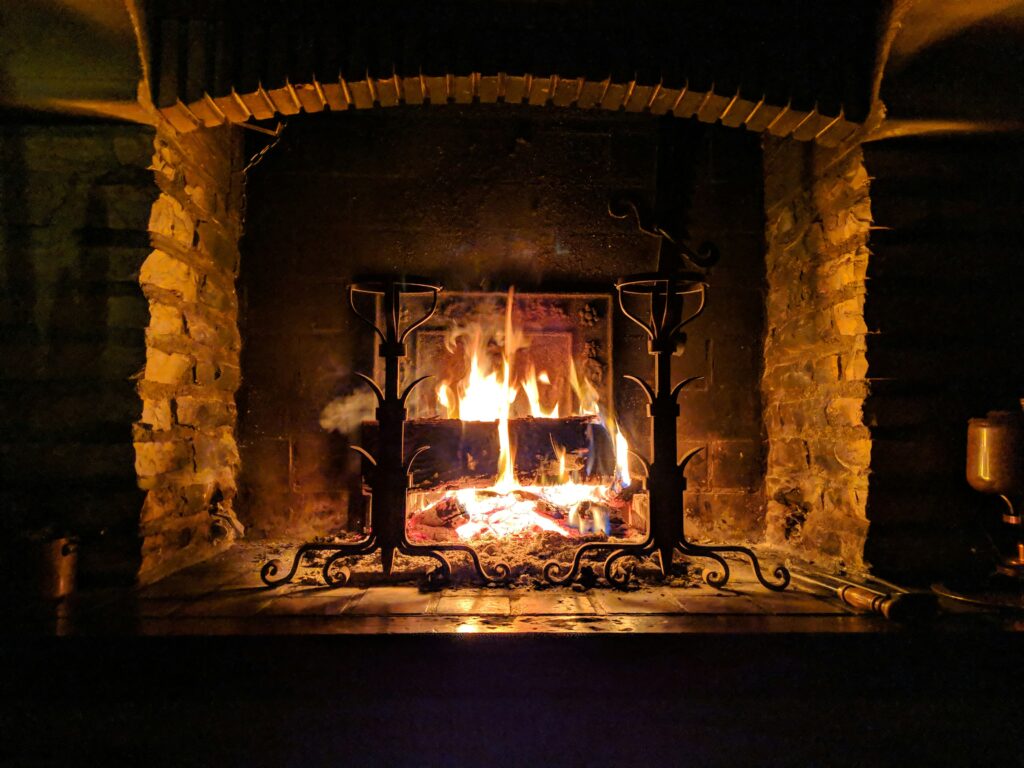
Wood Stoves and Fireplaces
If your home has a wood stove or fireplace, you're in luck. These are excellent sources of heat during a power outage. Stocking up on dry, seasoned wood before winter hits ensures you have fuel to keep your house warm.
Wood stoves are particularly efficient, providing heat for extended periods and requiring little maintenance once set up.
Kerosene Heaters
Kerosene heaters can be another good option for emergency heating, especially in extreme cold. They produce strong radiant heat, which can warm up specific rooms quickly.
Like propane heaters, kerosene models should only be used with proper ventilation to avoid dangerous fumes.
Battery-Powered Space Heaters
While not as powerful as gas-powered heaters, battery-powered space heaters can provide some warmth during a short-term power outage. These heaters are generally compact, making them ideal for warming smaller spaces like bedrooms or bathrooms.
While they won't heat large areas effectively, they can be a temporary solution to keep specific rooms warmer when you’re facing a brief outage.
By having one or more of these alternative heat sources on hand, you can ensure that your home remains livable during unexpected power outages, no matter how cold it gets outside.
For more information on how to keep your HVAC system running efficiently even in extreme cold, check out our guide on Furnace Safety. Proper furnace maintenance can help prevent unexpected breakdowns and keep your home warm when you need it most.
Tips for Staying Warm During a Power Outage
When the power goes out during a cold snap in Kansas or Missouri, it’s important to use practical methods to keep your home warm and comfortable until electricity is restored.
Below are some easy-to-implement tips to help retain heat and maintain a safe environment for you and your family.
Insulate One Room
Rather than trying to keep the whole house warm, focus on insulating one central room where your family can gather. Choose a room with minimal windows, and cover door gaps with towels or blankets to prevent drafts.
You can also hang blankets or heavy sheets over windows to block out the cold air. Consolidating your efforts in one space will help retain warmth more effectively.
Use Body Heat to Your Advantage
Body heat can be a surprisingly effective way to stay warm. By gathering in the same insulated room, family members can share body heat, especially when bundled under blankets. If you have sleeping bags, they provide excellent insulation, keeping you warm even in cooler indoor temperatures.
Utilize Thermal Blankets or Sleeping Bags
Investing in thermal blankets or insulated sleeping bags can be incredibly helpful during a power outage. These items are specifically designed to trap body heat, making them ideal for staying warm when other heat sources are unavailable.
Keep a few of these on hand to use during colder weather or emergencies.
Candles as a Heat Source
Candles can provide a little extra warmth in a pinch, though they should not be relied on as a primary heating source. For a slight heating effect, you can place several candles inside a metal container or beneath a clay pot, which can help radiate heat in a small area.
Always exercise caution by placing candles on stable surfaces and keeping them away from flammable materials.
Dress in Layers
One of the most effective ways to stay warm is by dressing in layers. Start with a moisture-wicking base layer to keep sweat away from your skin. This is followed by insulating layers like wool or fleece to retain heat. Finally, wear a windproof and waterproof outer layer to protect against drafts.
Don’t forget to wear thermal socks, gloves, and a hat to keep your extremities warm—since a lot of body heat is lost through the head and feet, covering them is key.
Use Heavy Curtains or Blankets Over Windows
Windows are a common source of heat loss during cold weather. To insulate your home, cover windows with heavy curtains or blankets to block cold drafts from entering and to trap warm air inside. Even if you don’t have insulated curtains, blankets or sheets will still help retain heat.
Keep Doors Closed
Keeping doors closed to rooms that aren't being used helps limit heat loss. Focus on warming the central areas where your family gathers and close off other parts of the house.
This strategy ensures that the warm air generated by any heating methods stays contained in the rooms where it’s most needed.
Cook to Stay Warm
If you have access to a gas stove, cooking can help raise the ambient temperature in your kitchen. Not only does this provide warm meals, but the heat from cooking can also make the space feel more comfortable.
However, never use your stove or oven as a primary heat source, as this can lead to carbon monoxide buildup. This is very dangerous. Always ensure your kitchen is well-ventilated while cooking.
Stay Active
Physical activity generates heat, so even light exercises like walking around the house or doing stretches can help keep you warm. Encourage family members to engage in activities that require movement. This will stimulate circulation and help maintain body warmth.
Preparing for Future Power Outages
The best way to deal with a power outage is to prepare in advance. Here are some steps you can take to ensure you're ready for the next cold snap:
Invest in a Generator
A whole-home generator can be a valuable investment for keeping your home warm and functional during a power outage. With a generator, you can power essential appliances like your HVAC system, refrigerator, and lights.
This allows your home to remain comfortable and safe during extreme weather conditions. For more information, check out our page on Whole-Home Generators.
Maintain Your Furnace
Taking the steps to make sure your furnace is in peak condition before winter hits is crucial for preventing unexpected breakdowns. Schedule regular maintenance checks to avoid issues that could leave you without heat during extreme weather. Learn more about furnace safety in our Furnace Safety blog.
Stock Up on Supplies
Make sure you have an emergency supply kit that includes blankets, thermal clothing, non-perishable food, bottled water, and extra batteries. If you use propane or kerosene heaters, keep a safe amount of fuel on hand.
Protect Your Pipes
Power outages during a cold snap can cause pipes to freeze, leading to costly repairs. Insulate your pipes and allow faucets to drip during freezing conditions to prevent them from bursting. Read more on how to prevent frozen pipes in our guide on Preventing Frozen and Bursting Water Pipes.
By preparing your home with alternative heat sources and following tips on how to stay warm, you can stay safe and cozy during a power outage. When facing frigid weather Kansas and Missouri, remember that staying proactive and prepared can make all the difference.
Maestro HVAC Zoning Solves Your Home’s Hot Zones and Cold Zones
You have 2 or more thermostats in your car, so why should you be content with only 1 thermostat in your home? If you want it warmer in some areas of your home and cooler in others, then an HVAC zoning system is for you.
Or if you have rooms that are always too hot or too cold compared to the rest of your home and you want to even out the temperatures, you also can benefit from an HVAC zoning system.
Most homes have areas that suffer because a single thermostat located in one area controls the temperature in all parts of the home. The thermostat only knows the temperature where the thermostat is actually located.
You simply cannot achieve whole-home comfort with one thermostat, just like you can’t control all your lighting with one light switch.
Our Maestro Zoning system lets you control the temperature in all areas of your home by allowing you to send conditioned air when and where it is needed. You will feel more air than you have ever felt before out of your system.
Maestro Zoning Allows You to Control Which Rooms Get Cooled and Heated Air
An HVAC zoning system consists of 2 or more thermostats placed in problem areas in your home and an electronic monitor that activates dampers in your ductwork to move conditioned air directly to those rooms where a greater supply is needed.
Anthony’s Maestro Zoning system can be installed quickly and easily in your home, to make every room a Goldilocks room, that is “just right” temperature-wise.
By giving homeowners more control over how they heat and cool their homes, Maestro Zoning enables the creation of customizable comfort zones.
This keeps all family members happy while saving money on energy bills at the same time, by sending conditioned air only to the zones that need it and only when they need it.
How Zoning Works
Zoning is a simple, economical way to gain better airflow to problem areas without adding an additional heating and cooling system. It uses automatic dampers (which are pneumatically activated so there are no motors that eventually fail) in your vent work.
A zoning system allows you to control the temperature independently in separate areas of your home by opening some dampers and closing others.
The brain of the zoning system is an electronic monitor that activates the dampers as ordered by the individual thermostats in the areas served.
It can even be used with wireless thermostats that can be carried from room to room to ensure the desired temperature in that room. You can also control thermostats with your cell phone. Click here to view a video on how the zoning damper system works.
Maestro Zoning is Right for Any House
Zoning is all about the comfort of the homeowner, and any home can benefit from zoning if the homeowner wants more control over the temperature in different areas of their home.
Homes with hard-to-cool or hard-to-heat areas, or with multiple levels that require more than one thermostat are perfect for zoning.
These include homes with:
- multiple levels, like two stories or split levels
- rooms over the garage or added onto the back
- finished areas in the basement or attic
- expansive glass areas that let in ambient heat
- family members who prefer different temperatures than others
- home offices
- portions of the home built over a concrete slab floor
- wings extending off the main living area in multiple directions
- large, open areas such as vaulted ceilings or lofts
Zoning Beats the Heat in Two-Story Homes or Bedrooms over the Garage
Since a thermostat only knows the temperature of the area it’s located in, your home can suffer from stark temperature variances in different rooms. Because thermostats are normally located on a home’s first level, rooms on upper levels can be unbearably hot because of the “stack effect” of warm air rising.
Also, second-floor areas have more heat gain because the ceiling is the hot attic. And if you are the unlucky one whose bedroom is over the garage, you know that no matter how much the AC is cranked in the house your room is always hot in the summer. Rooms over garages are always cold in the winter, too.
Maestro Zoning is a great option for homes with these configurations. Rather than install window units in your upstairs bedrooms or keep your lower levels uncomfortably cool in an attempt to accommodate the upper levels, zoning has become a must-have solution for any two-story home.
Zoning Eliminates Arguments Over Temperature
No more arguments over temperature in the house – with Maestro Zoning you have control of the temperature in your room, and your family members have control over theirs.
The dampers in the ductwork are activated by the electronic monitor depending on the set temperature from individual thermostats in the areas served.
These dampers allow cooled air to be sent into warmer rooms while restricting air flow to other rooms. Since each room, or “zone” has a different thermostat, one person can enjoy a warmer room while another luxuriates in their own much cooler zone.
Call our Maestro Zoning Experts for a Free Estimate
Call our Maestro Zoning experts today for a free estimate, and we will come to your house and explore the many options available to customize a zoning system to meet your needs.
Call us at A-N-T-H-O-N-Y (268-4669) KS or MO or click here to submit your information and we will contact you at a time that is convenient for you.
When your central AC blows hot air, it often means you have a frozen coil. Frozen may sound like a good problem for an AC to have, but your system cannot cool your home if the coil is iced over.
It is important to know that AC technicians cannot fix your frozen coil problem until the coil thaws. So if your AC is not producing cold air, take these steps before you call your technician:
1. Check your filter
A dirty filter could be the only issue preventing your AC from cooling your air, and that is an easy fix. Turn off your furnace fan by turning your system to OFF on your thermostat. Locate your return vent, unscrew the cover (if any), and pull out your filter.
If it’s dirty, simply replace it. Write down the size indicated on the edge of the filter, and purchase a new one at a home improvement store. With your system still OFF, pull out the dirty filter, paying attention to which way the air flow arrow points on the edge of the filter, and put the new filter in facing the same direction.
2. Thaw out your AC
If your filter is not dirty, try thawing out your AC coil. First, switch your thermostat to OFF and your fan to ON. This will start defrosting your coil, which is located inside the air handling unit next to your furnace.
Call an expert technician from a reputable heating and cooling company and set up an appointment to have them come look at your AC unit after the coil thaws. Give your unit a few hours to fully defrost, and head to a movie theater or restaurant to stay cool.
To see if your coil is thawed, locate your air handler and the frozen coil. Check the condensate pan underneath the coil to make sure it is draining properly, and not leaking and causing damage to your floor.
3. Turn your AC back on
After a few hours, check your coil. It should be dry and free of frost or ice. Switch your thermostat back to “cool” to turn your AC back on. If the air comes out cooler than room temperature, you have fixed your AC problem! If not, it is now ready for your technician to make any necessary repairs.
Even if your AC is working again, it is good to have your technician inspect the system, as a frozen coil usually a sign that something is wrong.
Don’t be stuck with a non-functioning AC system on a hot day when the demand for technicians is high, and the wait for service is long. Get your checked annually, before trouble starts. Call Anthony Plumbing, Heating & Cooling at A-N-T-H-O-N-Y (268-4669) KS or MO, ((913) 298-0444), or click here to schedule a service call.
Do you intend to replace or install a central air conditioner? What are your air conditioner considerations? Choosing an air conditioner involves a lot, that is, from price to setup, noise level to efficiency.
What will guide you to choose the best air conditioner for your home? The following ten questions from Anthonys Heating and Cooling will provide you essential clues.
1. How much do you want to spend?
Window air conditioners are the cheapest room air conditioners. The standard price for a window air conditioner with basic features such as an adjustable thermostat, multiple fan speeds, a timer, and manual or electronic controls ranges from $200 to $450.
Price increases with additional features such as air purifiers, onboard heating modes, remote controls, and energy-saving functions.
Through-the-wall AC Unit types are more expensive compared to window air conditioners; they range from $350 to $700. You need to purchase a wall sleeve for their installation.
Standard portable air conditioners can cost you from $350 to $720, depending on the features. They are often used in manufacturing facilities, to cool computer rooms and large office spaces.
Ductless mini splits are the most expensive air conditioners. Their prices range from $900 to $2500. On top of that, you need to set some amount of money for professional installers or AC replacement experts.
PTAC air conditioners are mostly used in the hospitality industry and the best option for cooling and heating single rooms.
From above you can choose which one will serve your Kansas City AC Installation needs.
2. Does your residence or office have air conditioner restrictions?
Some homeowners associations, apartment complexes, and office buildings have rules against installing windows or through-wall air conditioners for aesthetic and safety reasons.
Also, due to extensive installation, a ductless mini-split air conditioner may not be an option. In these situations, AC Installation with portable units are the best alternatives.
3. What is your physical air conditioner space?
Portable air conditioners need sufficient space for their effectiveness. Both window air conditioners and through-wall air conditioners don't need any floor space, because they either sit inside a wall or window.
Mini-split systems due to their wall-mountable blower units and a large part of the AC situated outside, they take some amount of space.
If you live in a small room, opt for the window or through-wall Kansas City AC Installation. For common spaces, a ductless mini-split system will work better while portable ones will work for large areas.
4. What type of windows do you have?
If you want portable AC, you must know they are set up to vent hot air through siding windows or double-hung windows. However, if windows are not available, some modes are adjusted to vent air through a wall hole or drop ceilings.
Standard portable air conditioner installation kits cannot fit cracked windows, but you can make your own customized casement window kit through Plexiglas.
On the other side, if you want to install window air conditioners, you should know they are designed for vertical sash windows only. If you have slide windows, you can install specially designed windows even though they are expensive.
Mini-split conditioners and through-wall air conditioners do not need a window for installation.
Americans are aware of the dangers of heart disease and stroke and the all the messages encouraging us to eat right and exercise to reduce the risk of these deadly events.
Research is now showing that air pollution is another cause of heart disease and stroke – and it is not something people can control as easily as their diet. But as the average person spends 90% of their time indoors, eliminating air pollution is a reachable goal.
Every fall, I tell myself I will test the furnace before winter shows up. Then that first cold morning hits Kansas City, the air smells like frost, and I cross my fingers waiting for the vents to warm up. Some years, I am lucky. Other times, I hear that click, and nothing happens.
If you have lived here long enough, you know how fast Kansas City weather turns. One day it is fifty degrees and sunny, the next there is frost on the car and you are digging out space heaters. When the furnace shuts down during a Kansas City cold spell, the chill sets in fast and the whole house feels it.
Here is what to watch for before winter settles in for good.
1. Uneven Heat Around the House
You walk into one room, it is warm. The next feels like the windows are open. That is usually a sign your furnace is not moving air evenly. It could be the ducts, the blower, or a dirty filter choking airflow.
When the system has to work harder to push air around, it burns more fuel and wears down faster. A quick furnace tune-up before cold weather hits can get the airflow balanced again.
2. New Noises You Have Not Heard Before
Bangs, squeals, rattles, whatever the sound is, it usually is not good. A belt might be loose, a motor could be starting to fail, or something simple could be out of alignment.
Small noises turn into big repairs if you wait. The National Fire Protection Association reports that heating equipment is still a leading cause of house fires, so if you hear something off, it is worth checking now instead of mid-January.
3. Energy Bills Creeping Up
If your gas or electric bill jumps but your habits have not changed, it might not be the utility company, it might be your furnace. Dirty filters, aging parts, or a system losing efficiency all make the unit run longer to keep up.
Older furnaces run at about 60 percent efficiency, while new ENERGY STAR models reach up to 98 percent. That gap shows up fast on Kansas City bills, especially when the furnace runs around the clock.
4. The Furnace Keeps Starting and Stopping
Short cycling, when the furnace kicks on and off every few minutes, wears down parts quickly. It could be a bad thermostat, a blocked filter, or overheating inside the system.
If you hear that constant on-off pattern, get it looked at soon. It is one of those things that can snowball into a full breakdown if ignored.
5. Weak or Cold Air Coming from the Vents
You expect a wave of warm air, but it feels like a light breeze instead. That can mean the blower motor is fading, a duct has a leak, or the system is not firing correctly.
With Kansas City winters dropping below freezing, you will feel the difference fast. It is easier and cheaper to fix airflow problems before they turn into no heat at all.
6. A Yellow Pilot Light Instead of Blue
Take a quick look at your pilot flame. It should burn steady and blue. A yellow or flickering flame means it is not burning clean, which can create carbon monoxide.
This one is serious. Turn the system off and call an emergency heating contractor right away. It is not something to wait on or try to fix yourself.
7. Your Furnace Is Older Than 15 Years
Most furnaces last between fifteen and twenty years, and that is with good maintenance. Once yours hits that range, efficiency starts to drop, and repairs come more often.
If it feels like every winter brings a new problem or your bills are higher than last year, it might be time to start comparing options for a furnace replacement.
8. Strange Smells You Cannot Explain
A little dust smell is normal when you first turn on the heat for the season. But if you smell something burning that does not go away, or a musty or gas odor, that is different.
Burning smells can mean parts are overheating. Musty odors can point to mold in the ducts. Gas smells are an emergency. Shut the system down, leave the house, and call for help.
Why It Pays to Act Early
Kansas City has one of those climates where you do not get much warning before winter shows up. By the time the first real cold front hits, heating companies all over the metro are already booked.
Fixing small issues now means you skip the rush and avoid paying for emergency service later. ENERGY STAR reports that regular maintenance and timely repairs can improve efficiency by up to 15 percent and prevent surprise breakdowns.
Repair or Replace?
If your furnace is newer, still under warranty, and the issue is small, repairs make sense. But if it is over fifteen years old, breaking down often, or just not heating like it used to, a replacement could save you money long-term. New ENERGY STAR furnaces can reach 98 percent efficiency, cutting fuel waste and lowering heating bills through a Kansas City winter.
Stay Ahead of the Cold
Don't wait for that first cold snap to find out your furnace needs help. At Anthony Plumbing, Heating, Cooling & Electric, we have been keeping Kansas City homes warm for over seventy years. Schedule your furnace check or repair today and head into winter knowing your system is ready for the season ahead.
Do you have a Gas furnace for Backup Heat?
Shut off your Heat Pump if you have a Gas Furnace for the Backup Heat
Homeowners that have what has been called a hybrid heating system ( a heat pump with a gas furnace backup) should operate only with the gas furnace for the winter if gas prices are low.
Natural gas prices have been very low in past years, caused by an abundance of gas available and mild fall temperatures. On the other hand electric rates continue to climb. The beauty of having a hybrid heating system is the ability to choose which source of heat is more economical to use and for this winter it certainly is natural gas.
With a typical operation of a hybrid heating system, the heat pump will operate with ambient temperatures above 32 degrees. When temperatures are below 32 degrees the gas furnace would operate.
To lock out the heat pump from operating, homeowners should switch their thermostats to “emergency heat” mode. Don’t worry about the word “emergency” – think of it as auxiliary heat which is the gas furnace.
Note: In all electric homes where the backup heat source is an electric furnace, the heat pump should be operated since it is more efficient than an electric furnace.