

Central air conditioning and heating systems are not “plug and play” appliances (like a window-mounted air conditioner). They must be sized and appropriately matched (outdoor unit, indoor cooling coil, indoor heating section with correct size blower and temperature controls).
They must also be installed with the proper air-tight ductwork, natural gas piping, electrical wiring (24, 120, and 240 volts), leak-free refrigerant piping and condensate piping.
If anyone of these systems is not sized and installed properly, the homeowner will pay higher utility bills than necessary, have a shorter equipment life, be less comfortable, and possibly be in an unsafe environment.
Consumer Reports does not rate central heating and air conditioning systems for the fact that so much of the success of the system depends on the installation and continued maintenance of the system. Very little – maybe 25% is the original manufacturer of the equipment.
When a homeowner has a problem with their system, they don’t call the manufacturer – they call the company that installed the system or a local service company. I would hate to think of trying to get a hold of anyone at a manufacturer that could solve their problems.
We like to look at all the manufacturer’s product offerings and do business with local distributors that provide good service (after 5:00, we can talk with someone). Also, we sell brands that have an emphasis on quality since we provide warranty service for what we install.
Many of the parts used in air conditioners are not generic, so it is common that there is one local source for a part. If the distributor for the manufacturer does not have the part, it could be days or weeks before the part is available.
Cooling and heating systems can have issues, even when brand new. So, choose a company to service and install the comfort system that you can trust.
Anthony Plumbing, Heating, Cooling, and Electric has been serving the Kansas City Metro area for over 70 years and employs “Technicians You Can Trust With Your House Keys”®.
The phone number is the same as the name. Call (913) 298-0444. Or online at anthonyphce.com.
You have 2 or more thermostats in your car, so why should you be content with only 1 thermostat in your home? If you want it warmer in some areas of your home and cooler in others, then an HVAC zoning system is for you.
Or, if you have rooms that are always too hot or too cold compared to the rest of your home and you want to even out the temperatures, you also can benefit from an HVAC zoning system.
Most homes have areas that suffer because a single thermostat located in one area controls the temperature in all parts of the home. The thermostat only knows the temperature where the thermostat is actually located.
You simply cannot achieve whole-home comfort with one thermostat, just like you can’t control all your lighting with one light switch. Our Maestro Zoning system lets you control the temperature in all areas of your home.
It allows you to send conditioned air when and where it is needed. You will feel more air than you have ever felt before out of your system.
How Does an HVAC Zoning System Work?
An HVAC zoning system consists of 2 or more thermostats placed in problem areas in your home and an electronic monitor which activates dampers in your ductwork to move conditioned air directly to those rooms where a greater supply is needed.
Anthony’s Maestro Zoning system can be installed quickly and easily in your home, to make every room a Goldilocks room, that is “just right” temperature-wise.
By giving homeowners more control over how they heat and cool their homes, Maestro Zoning enables the creation of comfort zones that are customizable, which keeps all family members happy while saving money on energy bills at the same time, by sending conditioned air only to the zones that need it and only when they need it.
Zoning is a simple, economical way to gain better airflow to problem areas without adding an additional heating and cooling system.
Using automatic dampers (which are pneumatically activated so there are no motors that eventually fail) in your ductwork, a zoning system allows you to control the temperature independently in separate areas of your home by opening some dampers and closing others.
The brain of the zoning system is an electronic monitor that activates the dampers as ordered by the individual thermostats in the areas served.
It can even be used with wireless thermostats that can be carried from room to room to ensure the desired temperature in that room.
You can also control thermostats with your cell phone. Click here to view a video on how the zoning damper system works.
Is a Zoning System Right for My Home?
Zoning is all about the comfort of the homeowner, and any home can benefit from zoning if the homeowner wants more control over the temperature in different areas of their home.
Homes with hard-to-cool or hard-to-heat areas, or with multiple levels that require more than one thermostat are perfect for zoning. These include homes with:
- multiple levels, like two stories or split levels.
- rooms over the garage or added onto the back.
- finished areas in the basement or attic.
- expansive glass areas that absorb the sun’s rays.
- family members who prefer different temperatures than others.
- home offices.
- portions of the home built over a concrete slab floor.
- wings extending off the main living area in multiple directions.
- large, open areas such as vaulted ceilings or lofts.
Zoning Beats the Heat in Two-Story Homes or Bedrooms over the Garage
Since a thermostat only knows the temperature of the area it’s located in, your home can suffer from stark temperature variances in different rooms. Because thermostats are normally located on a home’s first level, rooms on upper levels can be unbearably hot because of the “stack effect” of warm air rising.
Also, second-floor areas have more heat gain because the ceiling is the hot attic. And if you are the unlucky one whose bedroom is over the garage, you know that no matter how much the AC is cranked in the house, your room is always hot in the summer.
Rooms over garages are always cold in the winter, too.
Maestro Zoning is a great option for homes with these configurations. Rather than install window units in your upstairs bedrooms or keep your lower levels uncomfortably cool in an attempt to accommodate the upper levels, zoning has become a must-have solution for any two-story home.
Zoning Eliminates Arguments Over Temperature
No more arguments over the temperature in the house – with Maestro Zoning, you have control of the temperature in your room, and your family members have control over theirs.
The dampers in the ductwork are activated by the electronic monitor depending on the set temperature from individual thermostats in the areas served.
These dampers allow cooled air to be sent into warmer rooms while restricting airflow to other rooms.
Since each room, or “zone,” has a different thermostat, one person can enjoy a warmer room while another luxuriates in their own much cooler zone.
Call our Maestro Zoning Experts for a Free Estimate
Call our Maestro Zoning experts today for a free estimate, and we will come to your house and explore the many options available to customize a zoning system to meet your needs.
Call us at (913) 298-0444 and we will contact you at a time that is convenient for you.
May is National Electrical Safety Month, and it's the perfect time to focus on residential electrical safety. Many electrical accidents happen in homes.
With knowledge and awareness, you can help prevent these incidents from occurring.
Here are some tips to keep your home safe:
- Check your wiring: Old, outdated wiring can be a safety hazard, especially in older homes. If you see wires with cracked or discolored insulation, they need to be checked by an electrician. If you're not sure your wiring is safe, have a licensed electrician come out and inspect it.
- Have Ground Fault Circuit Interrupter (GFCI) outlets installed which are designed to protect against electrical shock by shutting off power when a current flows through an unintended path. Install GFCI outlets in areas that are prone to moisture, such as kitchens, bathrooms, and outdoor areas.
- Use surge protectors: Power surges can damage your electrical appliances and potentially start a fire. Use surge protectors to protect your devices and appliances.
- Don't overload outlets: Overloading outlets will lead to overheating and potentially start a fire. Use power strips to help distribute the load and avoid overloading outlets.
- Keep electrical cords away from water: Water and electricity don't mix, so make sure to keep electrical cords away from water sources. This includes appliances such as hair dryers, curling irons, and electric razors.
- Call a licensed electrician: If you're uncomfortable working with electricity, don't attempt any repairs yourself. Always call a licensed electrician to handle any electrical work in your home.
In conclusion, residential electrical safety is an important issue that shouldn't be ignored.
By following these tips and being aware of potential hazards, you can help prevent electrical accidents and keep your home safe. Happy National Electrical Safety Month!
Tornadoes, thunderstorms, and flooding are all common during this time, which can cause significant damage to your home and property.
Here are some tips to help you keep your home safe during severe weather outbreaks.
Protect Your Plumbing
During severe weather outbreaks, your plumbing can be at risk of damage due to flooding and power outages. Make sure your sump pump is working correctly and a battery backup sump pump is a “must have” item or a generator in case of power outages.
Also, have a backflow preventer installed to prevent contaminated water from entering your home's water supply.

Keep Your HVAC System in Good Condition and Protected
Your HVAC system can also be at risk during severe weather outbreaks. Have your system inspected and maintained by a professional to ensure it's working correctly.
Clean and replace air filters regularly to keep the system running efficiently. Have a surge protector installed to protect your HVAC system from power surges during thunderstorms and lightning strikes.
Install Whole-House Surge Protection
Power surges during severe weather outbreaks can damage your electrical appliances and equipment. Have whole-house surge protection installed to protect your home's electrical system from power surges. This will help protect your appliances, electronics, and HVAC system from damage.
Prepare Your Home against Flooding
Flooding can cause significant damage to your home and property. Make sure your gutters and downspouts are clean and free of debris to prevent water damage.
Install flood sensors and backup pumps in your basement to prevent flooding. Also, consider elevating electrical outlets and appliances to prevent water damage if you know your basement takes on water.
By protecting your plumbing, keeping your HVAC system in good condition, installing surge protection, and preparing your home for flooding, you can minimize the risk of damage and keep your home and family safe.
Call (913) 298-0444 for all your home protection needs and schedule an appointment today.
Think of the ducts in your home as the “lungs” of your home. Air passes thru some of the ducts in the form of positive pressure. These ducts are known as supply ducts. Some air passes thru different ducts in the form of negative pressure.
These ducts are known as return ducts. So, a duct system consists of both supply and return ducts. The return duct is almost always dirty because the air that goes thru it has not been filtered.
A typical duct system will have both a supply trunk duct and a return trunk duct. Branches extend from each trunk. Some branches are supply, and some return depending on the trunk they are connected to.
Trunk ducts are commonly made of sheet metal and are rectangular in shape. Branch ducts are typically smaller and round. They are usually made of sheet metal or flexible material.
None of the ducts you can physically see inside to view how dirty they are unless an access hole is cut. Even with an access hole, it may be tough to see how much dirt, dust, and debris is in the duct.
If you can’t see in a duct, how do you know if they need cleaning? Here are some indicators:
- If you have floor supply registers, lift the register, and look in the duct. Do you see debris?
- If you have to dust what seems like too frequently.
- If you have dogs or cats, there is a good chance your ducts need cleaning.
- If you have to replace your air filter more frequently than usual.
- If you occasionally hear noises coming from the duct.
- If you have had a remodel project.
Now, what makes a good duct cleaning job? Only two critical things:
- Number one is the right equipment designed to clean ducts. This is not a job for a regular shop vacuum cleaner. Ideally, a good cleaning job consists of brushing the interior of the duct while, at the same time, a strong vacuum is in the duct removing particles dislodged by the brushes. Without the use of brushes, duct systems do not get thoroughly cleaned. Also, the brushes used must have the ability to get into square corners of rectangular ducts.
- The second and essential item for good duct cleaning is conscientious technicians performing the work. Duct cleaning is not an easy job. Some trunk ducts and some branch ducts will probably be hard to access. These may be the dirtiest ducts. You will probably never know if they were cleaned. Professional duct cleaning technicians will do whatever it takes to clean the hard-to-get ducts. This may require moving stored items in basements, furniture in rooms, and accessing ducts in crawl spaces, attics, and garages.
Due to access challenges, cleaning a small portion of a duct system may take 2-3 hours. A get-in-get-out carpet cleaner or chimney sweep typically does not take the time to access those hard-to-get-to ducts.
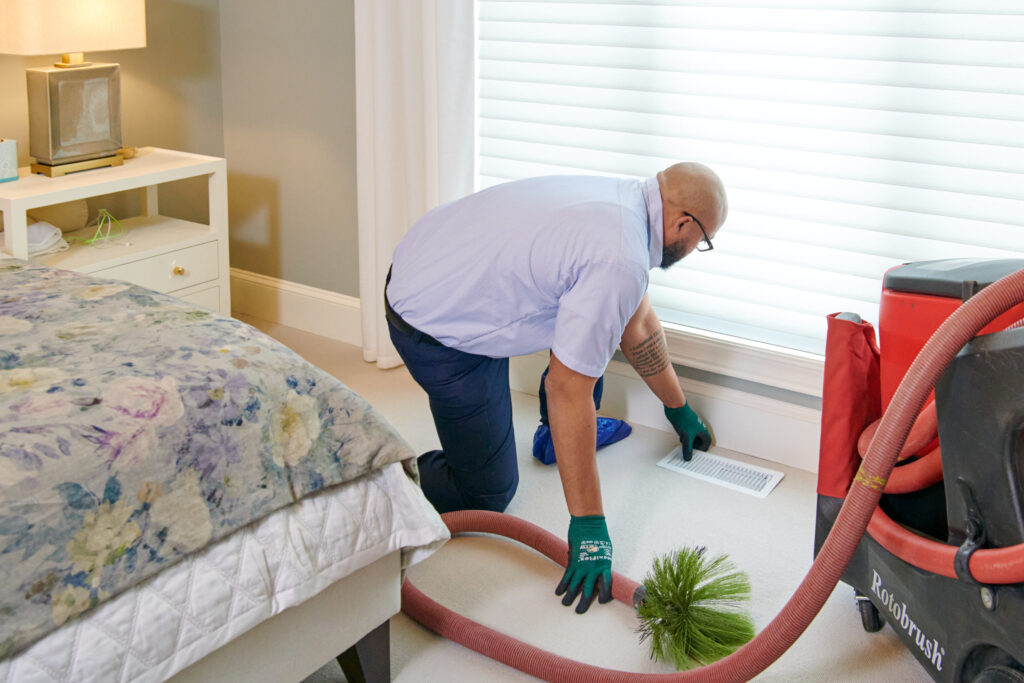
They know that you will probably not know if the whole system was cleaned.
These companies typically say that duct systems should be cleaned every year. However, with a thorough cleaning, you should not have to have them cleaned again for years unless you have a remodel project in your home.
The right cleaning equipment and conscientious technicians are the key ingredients for a good cleaning. Where do you get both of those?
Anthony Plumbing, Heating, Cooling & Electric has both of those and guarantees your house lungs (duct system) will be cleaned when we are finished, no matter how long it takes!
Dirty or Clogged Filter
Your furnace has a filter that keeps your furnace, ductwork, and air clean. Your filter impinges dirt, dust, allergens, pollutants, and other particles in the air. While most homeowners know about furnace filters, they don't know how often to change them.
Though it varies by filter type, you should replace most filters every month or two. Check your filter packaging for the recommended life of your filter.
If your furnace is not heating as well as expected, it could signal that you need to replace your filter.
If your furnace stays on longer than it should or is noisy, these could also signal a filter change.
TIP: Write the date you change the filter on the filter. Also, record a future date in your calendar to replace the filter.
Pressure Switch/Inducer Motor
When your furnace turns on, one of the first components to start is the draft inducer motor. The draft inducer motor is a small fan that pulls air from the combustion chamber and vents it outside your home.
The byproduct of incomplete combustion is deadly carbon monoxide, which must be vented outside your home. Your draft inducer motor and pressure switch work in tandem to ensure toxic gases are vented from your furnace.
When the inducer runs, it creates a vacuum inside the combustion chamber. For safety, a pressure switch is used to tell if the inducer motor is running by sensing the vacuum and closing a switch.
If the inducer motor does not turn on, the pressure switch will stay open. The furnace also will not operate.
Proper draft pressure is necessary to close the pressure switch.
When the switch does not close, it is usually because there is a blockage in the small tubing to the pressure switch or a blockage in the vent pipe.
Blower Motor Failure
The blower motor keeps the air moving throughout your home. Should this component fail, it doesn’t matter how efficient your furnace is; warm air won’t be distributed throughout your home. These motors have sealed bearings, and they are not oilable.
The blower can fail from age or a dirty blower wheel which makes the motor run longer. By having your ducts cleaned and your furnace tuned up annually, you can extend the life of your blower motor.
Cleaning the Flame Sensor
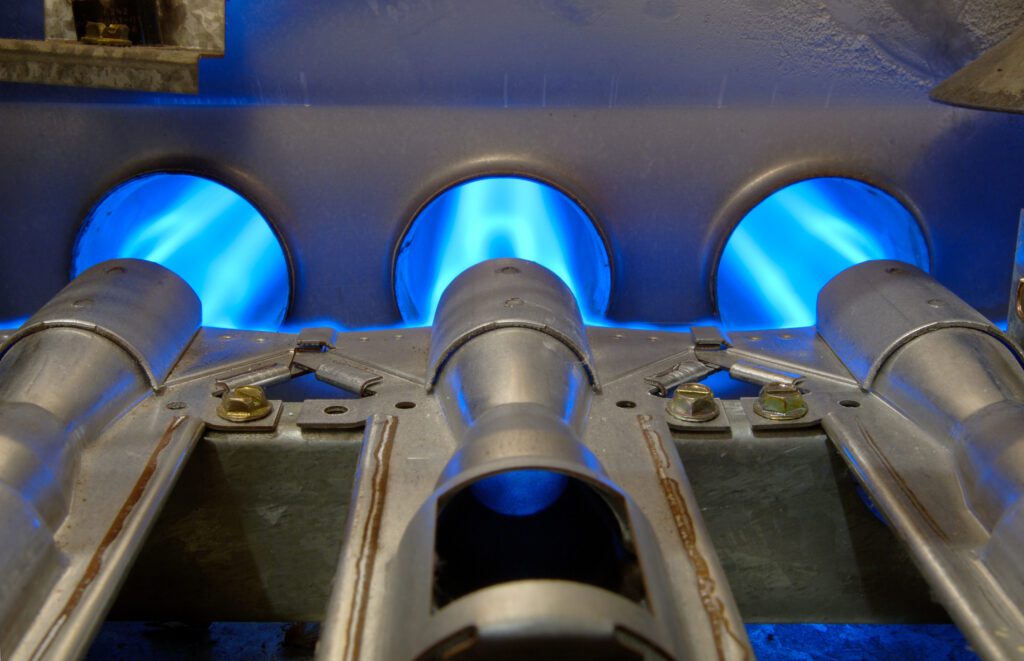
The burner box has a flame sensor rod positioned on its surface. The minute your furnace starts, it is the flame sensor’s job to identify the presence of a flame. If no flame is detected, the sensor will trigger safety features to shut down the system.
When the flame sensor malfunctions, the furnace stops operating. The problem usually lies in the maintenance of the sensor.
Over time, soot, debris, and other byproducts accumulate over the sensor rod.
This hampers its ability to function properly, causing delays in sensing the flame and abruptly shutting the heating system down. If the damage is not extensive, an Anthony HVAC professional will clean the flame sensor for you.
The technician will also thoroughly inspect your furnace heat exchanger to determine whether a replacement is needed.
Electric Supply
Check the power switch installed on the side of the furnace. It may have inadvertently been turned to the off position. Next, head to your main circuit breaker panel.
Verify that the furnace breaker is on. The breaker can trip due to high amperage, so turn it back on if it’s tripped.
Wait to see whether this reset prevents it from tripping again. As furnaces increase efficiency and intelligence, the equipment becomes more susceptible to power spikes and surges.
Talk to your Anthony Technician about options to protect your equipment from power fluctuations and outages.
Homeowners with auto-ray infrared garage heaters comment that these heaters rank high among the best inventions of all time! They are that amazing.
Your garage can now be a “Florida Room” with infrared rays (like the sun) warming your car, the floor, and all objects in the garage.
Some older homes have a branch supply duct from the home’s main system to heat the garage. There are two good reasons why building codes now prohibit this.
Number one is the fire rating of the garage that has been breached. Number two is that when the system is off, carbon monoxide or other toxic gases could enter the home thru the branch duct.
There are multitudes of reasons to heat your garage with infrared heaters.
Here are just a few:
- If the entrance to your basement is from the garage.
- If you have an overflow refrigerator or freezer in your garage.
- If you have a car or motorcycle.
- If you have a bathroom above or adjacent to the garage – you will never have to worry about pipes freezing.
- You have a hobby that requires you to spend time in your garage.
- You have electric outages or are concerned about power outages.
- You want to control the wintertime temperature in your garage.
- You have rooms next to or above the garage that are cold in the winter.
- You have pets that you would like to be in the garage at times.
Auto-ray garage heaters installed by Anthony Plumbing, Heating, Cooling, and Electric operate on natural gas only. There is no electrical circuit to these heaters, so you will always have inexpensive heat in your garage – even in a power outage.
Also, the heaters are ventless so that an auto-ray heater can be installed in any garage.
There is nothing like pulling your car caked with snow into a garage and waking up in the morning with a dry, toasty warm car and a dry floor. This is a very affordable must-have item!
Give your experts at Anthony PHCE a call or schedule online to get more information on installing a garage heater for your home.
This should be a common wintertime saying, which is the inverse of the common summertime saying, “It’s not the heat; it’s the humidity.”
What happens in our homes during winter months that makes us uncomfortable? Cold air enters the home when doors are opened, and normal leaks in the exterior. This cold air is heated inside the home, and when it is heated, it can hold more moisture.
So, it essentially sucks the moisture out of all the items (including you) in the house. What makes it even worse is that wood framing shrinks with less moisture, letting in more cold air.
We feel the dryness in our skin and nasal passages besides the static shock we receive when we touch a doorknob after walking across the carpet.
The ideal winter comfort zone combination for people is an indoor temperature of 72˚F to 75˚F and relative humidity of 35 to 40%. If we set the thermostat at 68˚F, it will take a higher relative humidity to feel comfortable.
The most effective method of adding humidity to a home is to have a central humidifier attached to the duct system.

These humidifiers are controlled by a humidistat which will turn the humidifier on when the furnace is on. The actual humidity is below the set point humidity on the humidistat.
A central humidifier is absolutely a must-have item to have a healthy house.
Other ways to add humidity to a home are not to operate bathroom exhaust fans or kitchen exhaust fans as long as you would in the summer.
Some people will disconnect their clothes dryer hoses and put a nylon hose over them to catch dryer lint. This will add heat and humidity to the space and is not recommended with a gas clothes dryer.
You may notice moisture on the interior of windows when you open blinds or drapes in the morning. With thermal pane windows, this is nothing to worry about.
Water vapor in the air is trapped between the closed window covering and the exterior glass, which can cause some condensation. With single-pane glass, too much humidity can become a problem.
The health effects of proper humidity in your home during winter are numerous. The more humidity in your home, the more your body can use its natural mucous defense to eliminate viruses in your respiratory tract.
The dryer the air in your home, the thicker is mucous and the less effective it is in extricating viruses out of our lungs.
When you think about wintertime health, think about humidity!
Did you know garbage disposals originated with the name garbage disposer? The leading manufacturer of garbage disposers (InSinkErator) never used the term “disposal” in the past.
They were worried about what homeowners would put down there, so they stuck with disposer – the original term for this appliance. Consumers and plumbers freely interchanged the two words, and now InSinkErator has switched to the term - disposal.
Types of Garbage Disposal
Some garbage disposals are made so well today that you can put virtually anything in them. The low-price disposals commonly found in new home construction do not have the features and the horsepower to be a catch-all.
Builder Model Disposal
Builder model disposals are typically only 1/3 horsepower (HP), noisy, and do not grind well. If you have a clogged kitchen drain more than once per year, there is a good chance you have a cheap disposal.
When looking to replace or install a new garbage disposal, one-half HP is the minimum you should consider installing. Residential disposals also come in ¾ HP, 1 HP, and 1¼ HP.
The larger the HP, the more features the unit will have. These features include the warranty length (up to 10 years for some models), grinding chamber size, grinding stages, and sound level.
If you have a stainless-steel sink, then, in essence, that is a megaphone for disposal noise. We recommend at least a ¾ HP or 1 HP Evolution model by InSinkErator. If disposal noise bothers you, then purchase the top-of-the-line disposal and a heavy cast iron kitchen sink. The combination of those two makes for a very quiet operation.
Batch Feed Disposal
Nervous about accidentally dropping something down your kitchen drain? The batch feed disposal is for you. This unique model operates by inserting a plastic handle in the opening, which does not allow any other waste to enter.
The turn of the handle is how the disposal engages, and that batch of garbage is ground. This is the safest disposal as nothing (like jewelry) can unexpectedly fall in once the plastic handle (the handle is called a “stopper” because it stops anything from being added – but it could be named a “starter” since it turns on the disposal).
The batch feed disposal works well for island sink applications, as there is no wall surface to install a traditional on/off switch.
How Do Garbage Disposals Work?
An air switch, which looks like a button, can be installed in the countertop close to the sink where the disposal is. Air switches are convenient for both island sinks and traditional sink locations.
So, if this essential kitchen appliance can “dispose of all,” is there anything that should not be put in? Yes – items that could be sticky when wet, like a big glob of rice, coffee grounds, or eggshells. Leave beef and chicken bones for the big HP disposals.
If your garbage disposal has been giving you a headache or you’ve got a clogged drain, we’d be happy to have our expert plumbers help you out.