
BLOG
Why Does My Water Heater Run Out of Hot Water?

Why does my water heater run out of hot water? If the water still gets hot but disappears halfway through a shower, the problem usually isn’t that your heater is broken. It’s that your tank can’t keep up with how fast you’re using hot water. A storage tank holds a fixed amount, and once it’s drained, it needs time to heat more. This guide focuses on why hot water runs out quickly and what affects your tank’s capacity and recovery. If your water never gets hot or only turns lukewarm, that’s a different issue, and our guide on why your hot water isn’t working covers that.
How Much Hot Water Should a Tank Actually Provide?
A traditional tank water heater stores roughly 40 to 80 gallons and keeps it heated to your thermostat’s setting. But the numbers that really matter are its first-hour rating (how much hot water it can deliver during a busy hour) and its recovery rate (how quickly it reheats once the tank is drained). A 50-gallon tank doesn’t give you endless hot water. It gives you about a tank’s worth, then a recovery period before it’s ready again. When your daily demand outpaces that rhythm, you run out. Almost every reason below comes down to one of two things: shrinking capacity or slowing recovery.
You’re Using Hot Water Faster Than the Tank Can Recover
The most common reason a water heater runs out of hot water is simple timing. Back-to-back showers, a load of laundry, and a running dishwasher can drain a full tank in minutes, and then everyone’s waiting on the recovery cycle. If your hot water runs out quickly only when the house is busy, and it returns after an hour or so, your heater is likely working fine but is being asked to deliver more than it can store and reheat at once. Spacing out hot-water tasks helps, but a household that consistently outruns its tank may simply need more capacity.
Sediment Buildup Is Shrinking Your Tank’s Capacity
Over the years, minerals in the water settle into a layer at the bottom of the tank. That layer takes up space that used to hold hot water, so your usable capacity quietly shrinks, and a tank that once covered two showers now barely covers one. Sediment also insulates the water from the burner or lower heating element, so recovery slows down too. A water heater not staying hot as long as it used to is one of the clearest signs. Flushing the tank during annual maintenance clears the sediment out, and it’s one of the cheapest ways to protect your capacity.
A Broken Dip Tube Is Mixing Cold Water Into Your Hot Supply
The dip tube carries incoming cold water to the bottom of the tank so it heats from the bottom up, keeping the hot water at the top ready to use. If that tube cracks or breaks, cold water dumps in near the top and mixes straight into the hot water heading to your faucets. The result is hot water that turns lukewarm fast and runs out well before it should. It’s a less obvious culprit than sediment, but a common one in aging units, and a plumber can diagnose it quickly.
Your Water Heater May Simply Be Undersized
Sometimes the tank was never big enough for the home. Families grow, bathrooms get added, and a heater that comfortably served two people may not keep up with five. If your hot water runs out no matter how you space things out, and the unit is otherwise healthy, you may have outgrown it. A plumber can size a replacement water heater to your household’s peak demand, so the new unit matches how you actually use hot water rather than just swapping in the same size again.
An Aging Heater Recovers More Slowly
Even a properly sized tank loses efficiency as it ages. Burners and heating elements weaken, sediment accumulates, and the recovery rate drifts slower, so the gap between running out and having hot water again keeps growing. Most tank water heaters last about 10 to 15 years. If yours is in that range and increasingly can’t keep up, slow recovery from normal wear is often the reason, and replacement usually costs less than repeatedly nursing an old unit along.
Kansas City Winters Make It Worse
There’s a seasonal factor, too. In winter, the groundwater feeding your tank comes in much colder, so your heater has to work harder and longer to bring each tank up to temperature. That stretches recovery times and means your hot water doesn’t last as long as it did in summer. If you notice the problem mainly in the colder months, colder incoming water is likely part of the story.
Would a Tankless Water Heater Solve It?
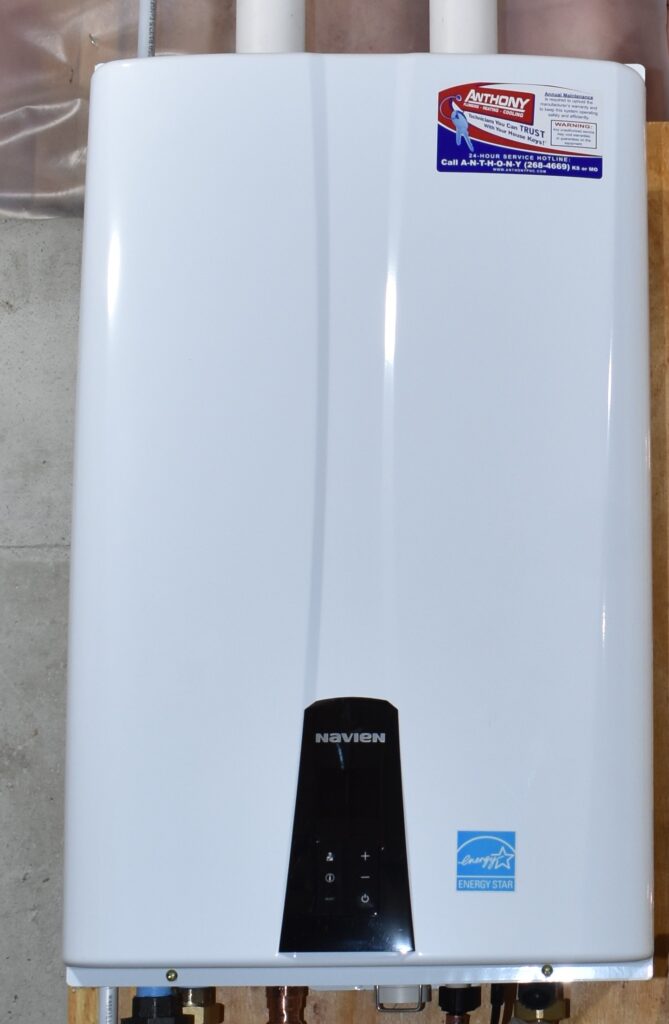
Because a tankless water heater heats water on demand instead of storing it, it never “runs out” the way a tank does. It delivers a continuous supply as long as the flow rate stays within its capacity. For households that constantly drain a tank, upgrading to tankless can end the cold-shower problem entirely, though very high simultaneous demand still needs the unit sized correctly. It’s not the right fit for every home, but if running out of hot water is a daily frustration, it’s worth asking a plumber whether tankless makes sense for you.
When to Call Anthony About Running Out of Hot Water
If you’ve spaced out your hot-water use and still run out, or you’re hearing sediment noises, getting lukewarm water, or running a unit past the 10-year mark, it’s worth having it looked at. Anthony Plumbing, Heating, Cooling & Electric has helped Kansas City homeowners restore reliable hot water for decades, with licensed plumbers who inspect your system, explain what they find, and recommend the right fix (maintenance, repair, or replacement) with upfront pricing before any work begins. Explore our water heater services or schedule service today, and we’ll figure out why your hot water isn’t lasting.
Schedule OnlineFrequently Asked Questions
Usually because demand is outpacing the tank’s capacity and recovery. That’s often combined with sediment shrinking the usable volume, a broken dip tube mixing in cold water, or an undersized or aging unit.
It depends on the tank’s size, your showerhead’s flow rate, and how much hot water is being used elsewhere at the same time. A healthy tank should cover typical back-to-back use before it needs time to recover.
Yes. Sediment takes up space inside the tank and slows heat transfer, cutting both how much hot water you have and how quickly it recovers. Flushing the tank during annual maintenance helps.
It depends on your household’s peak-hour hot water demand. A plumber can size a unit to your actual usage so it keeps up instead of running short.
A properly sized tankless heater heats on demand and won’t run out the way a tank does, though extreme simultaneous demand can exceed its flow capacity.